
Working in a Luxury Hotel: Complete Guide to Career Success in 2026

The luxury hospitality sector attracts thousands of candidates each year seeking a prestigious and rewarding career. From Parisian palaces to Côte d'Azur establishments, prestigious Alpine hotels and famous ski resorts like Courchevel or Megève, opportunities abound for those wishing to work in a luxury hotel.
This comprehensive guide explores the necessary training, essential skills, accessible careers and field realities for all those who dream of evolving in the demanding world of luxury hospitality ?
The Essential
Why Choose a Career in Luxury Hospitality?
A Rapidly Expanding Sector Despite Crises
Luxury hospitality demonstrates remarkable resilience in the face of changes in the tourism sector. While Airbnb competition is disrupting traditional hospitality, palaces and high-end hotels maintain their attractiveness.
In France, thousands of luxury rooms are currently under construction. Paris, Monaco and the Côte d'Azur remain destinations favored by an increasingly demanding international clientele. This clientele, composed of 80% foreigners, seeks a unique experience where every detail counts.
The luxury hotel market experiences no lasting crisis. Wealthy clients continue to favor prestigious establishments for their stays, creating a constant need for qualified professionals.
The Advantages of a Career in Palaces
Working in a luxury hotel offers attractive professional prospects. Working conditions include considerable benefits beyond the base salary: accommodation, meals provided and laundry taken care of by the establishment. These benefits represent substantial savings for employees.
Compensation varies according to positions and number of hours worked (generally between 39 and 44 hours per week versus 35 hours in other sectors). For entry-level operational positions (chambermaid, kitchen assistant, waiter assistant), the average annual salary is around €27,000, plus benefits in kind.
Career progression is one of the sector's major assets. Luxury hotels invest heavily in continuous training for their teams. A receptionist can evolve to senior receptionist after approximately 2 years of experience, then head receptionist after an additional 2 to 3 years, before accessing management positions after several years of practice.
International mobility also represents a considerable advantage. Major chains like Marriott, InterContinental or Shangri-La allow you to discover the world while progressing professionally. This international dimension considerably enriches a career in luxury hospitality ?
Training and Education for Working in a Luxury Hotel
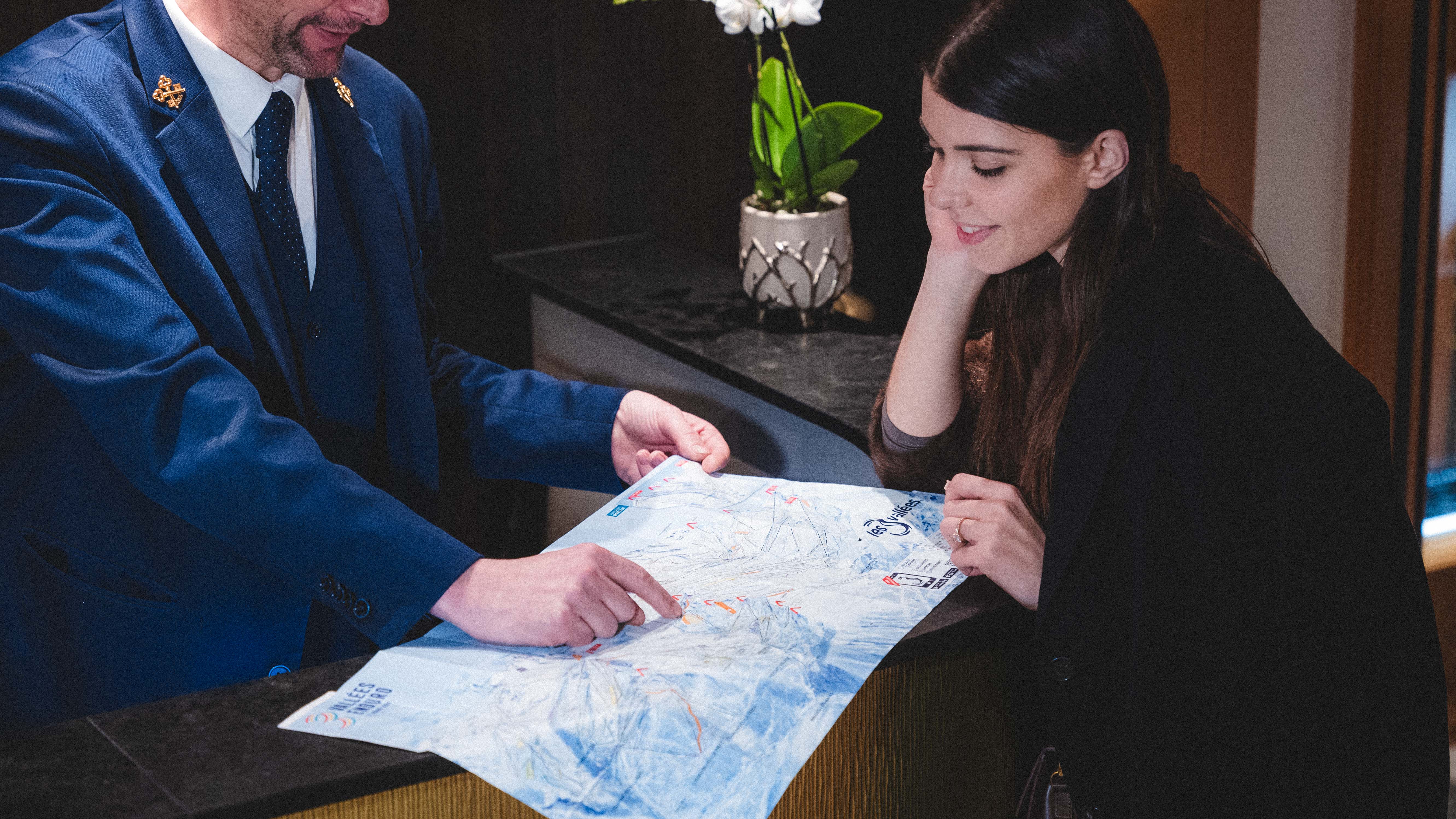
Classic Luxury Hospitality Pathways
The CAP in Hotel Services constitutes the entry point for accessing operational positions. This short training allows you to acquire the technical basics of the profession and quickly enter the working world.
The STHR Baccalaureate (Sciences and Technologies of Hospitality and Catering) offers a complete vision of the sector. This versatile training prepares for different hospitality professions by combining theory and intensive practice.
The BTS in Hospitality and Catering represents a diploma particularly appreciated by recruiters. In two years after the baccalaureate, this course trains operational professionals capable of directly joining a palace. Students develop solid technical skills and an in-depth understanding of luxury standards.
Advanced Training to Aim for Excellence
To quickly access management positions, advanced training is essential. The Professional Bachelor's Degree in Hotel Management allows you to deepen skills in team management and operational steering.
The Bachelor's in Luxury Management, often offered in the 3rd year after a BTS, specializes in luxury codes. This training addresses the specificities of demanding clientele and the particular expectations of palaces.
The Master's in Hospitality Management or Luxury Management (Bac+5) gradually opens doors to management positions. These excellence training programs prepare for managerial responsibilities, but access to establishment director positions generally requires several years of field experience after graduation. Young graduates often start with middle management positions before accessing, after 5 to 10 years of experience, management positions.
Work-Study Programs: The Royal Path to Management
Work-study programs in luxury hospitality represent one of the best ways to professionalize. This formula allows you to acquire concrete field experience while continuing your studies.
Parisian palaces and prestigious establishments actively seek motivated work-study students. The advantage? Being trained directly in high luxury standards, understanding international clientele expectations and developing a solid professional network.
To secure a work-study position in a 5-star hotel, you must demonstrate your interpersonal skills from the first contact. Recruiters favor candidates who understand luxury codes and show genuine passion for the sector.
Training for Career Changes
Career change to luxury hospitality is entirely possible. Many specific modules exist for adults changing careers.
VAE (Validation of Acquired Experience) allows professional experience to be recognized and a diploma obtained without completing a full course. This path particularly interests those who have already worked in sectors related to customer service.
Continuing education offered by hotel schools provides short and intensive programs. These targeted training programs allow you to quickly acquire essential skills for joining a luxury establishment ?
Essential Skills to Succeed in Luxury Hospitality

Technical Know-How
Mastery of hotel management systems (PMS, reservation software) constitutes an essential technical prerequisite. These IT tools allow efficient management of reservations, room allocation and customer follow-up.
Knowledge of service standards specific to palaces is acquired mainly in the field. Every gesture counts, every interaction must reflect excellence. From housekeeping to room service, through the hotel lobby, each department operates according to strict protocols.
Hotel operations management requires versatility and rigor. Whether in catering, events or room management, luxury professionals must master complex processes while maintaining impeccable service quality.
Linguistic and Communication Skills
Mastery of English is imperative for customer-facing positions. Receptionists, concierges, waiters and lobby staff must communicate fluently in English with 80% foreign clientele. For back-office positions like chambermaid or cook, this requirement is less strict.
A second foreign language represents a major asset for customer-facing positions. Spanish, Mandarin Chinese or Arabic are particularly sought after depending on destinations. Wealthy clients from the Middle East or Asia particularly appreciate being welcomed in their native language.
Active listening and adapted communication make the difference. It's not just about speaking languages, but understanding unexpressed expectations, decoding subtle needs and anticipating requests before they're even formulated.
Soft Skills and Essential Interpersonal Skills
Attention to detail defines the very essence of luxury. A poorly positioned cushion, a slightly uncomfortable room temperature, a crease on a tablecloth… These details invisible to the general public are immediately spotted by demanding clientele with little tolerance for errors.
Stress management and pressure resistance prove crucial. Days are long, unexpected situations frequent, and demands constant. Keeping one's calm and smile in all circumstances is an integral part of the job.
Professionalism and self-control are never negotiable. Whatever a client's behavior, the team must maintain an impeccable attitude. This ability to remain professional in all circumstances distinguishes great professionals from others.
Discretion takes on capital importance in palaces. Celebrities, businesspeople, political figures frequent these establishments seeking confidentiality. Staff must be invisible while being omnipresent, attentive without being intrusive.
Team spirit and solidarity cement luxury hotel teams. Faced with activity peaks and daily challenges, team cohesion makes all the difference. Everyone must be able to count on colleagues to maintain the expected level of excellence ⭐
Careers and Opportunities in Luxury Hotels
Operational and Customer-Facing Positions
The receptionist embodies the establishment's ambassador. First and last contact with guests, they set the tone for the customer experience. This position requires relational excellence, language mastery and perfect knowledge of hotel services.
The concierge represents the true local expert at clients' service. Reservations at Michelin-starred restaurants, tickets for sold-out shows, organizing personalized surprises… The concierge achieves the impossible to satisfy the most extravagant requests.
The waiter assistant and section head guarantee excellence in catering. In establishments with gourmet restaurants, these professionals combine culinary technique and service art to create unforgettable moments.
The chambermaid and housekeeper ensure housekeeping perfection. Room cleaning and maintenance in a palace follow strict protocols. Each room must be impeccable, every surface perfectly clean, every detail in its place.
Management and Supervisory Positions
The front desk manager coordinates the entire front office team. They supervise daily operations, manage schedules and ensure service standards are met. This responsible position requires leadership and ability to solve problems quickly.
The executive housekeeper (housekeeping manager) leads cleaning and maintenance teams. With sometimes considerable staff, they must optimize organization so each room is ready on time while maintaining impeccable quality.
The event coordinator orchestrates seminars, weddings and corporate events. Palaces regularly host prestigious events requiring meticulous organization and perfect coordination between all services.
The deputy director assists the general manager in steering the establishment. This strategic position requires a global vision, strong managerial skills and perfect understanding of luxury economic stakes.
Specialized Careers on the Rise

The Spa Manager develops and supervises the establishment's wellness offering. With the rise of spas in luxury hotels, this career is experiencing strong growth. They recruit therapists, design treatment offerings and ensure service quality.
The sports coach and lifeguard complete the offering of palaces equipped with sports infrastructure. These professionals offer personalized programs to clients wishing to maintain their sports routine during their stay.
The customer experience manager analyzes and optimizes the customer journey. This recent position responds to new expectations regarding extreme personalization. They collect data, identify improvement areas and implement actions to delight each client.
The maintenance technician ensures perfect operation of facilities. In a palace, a breakdown is unacceptable. These technical professionals maintain equipment to the highest standards and intervene discreetly to resolve any problem.
Career Evolution and Prospects
Turnover in operational positions remains controlled but real. This rotation creates regular opportunities for new talent. Establishments constantly seek motivated and passionate profiles.
Rapid evolution toward responsible positions characterizes the sector. A performing and involved employee can quickly climb the ranks. Palaces favor internal promotion and value internal career paths.
International mobility in major luxury chains opens extraordinary horizons. Working in Paris, then in Dubai, then in New York… This international dimension considerably enriches a career and develops global luxury hospitality expertise.
Opportunities now extend beyond traditional hospitality. Management of prestigious real estate assets, high-end reception space development or hospitality consulting offer new opportunities for experienced professionals ?
How to Apply and Succeed in Interviews in Luxury Hospitality
Preparing Your CV and Cover Letter
Highlighting field experience and internships is the absolute priority. Luxury hotel recruiters favor candidates who have already evolved in demanding environments. Each experience, even brief, must be valued and explained.
Emphasizing soft skills and interpersonal skills makes the difference. Beyond technical skills, recruiters seek personalities aligned with luxury values. Elegance, discretion, attention to detail must show through from the CV.
Adapting your profile to luxury codes demonstrates understanding of the sector. The CV must be sober, elegant, without errors. The cover letter must reveal genuine knowledge of the targeted establishment and authentic passion for the palace universe.
Recruitment Stages in Palaces
The selection process in luxury hotels is demanding and takes place in several stages. After an initial CV screening, selected candidates generally undergo a telephone interview, then one or more in-person interviews.
Personality and aptitude tests often complete the process. These assessments verify the match between the candidate's profile and position requirements. Stress management, adaptability and relational intelligence are particularly scrutinized.
Interviews with operational departments assess the candidate's ability to integrate into teams. Field managers seek technically competent collaborators but especially those capable of adapting to the establishment's culture.
Mistakes to Avoid
Neglecting the importance of interpersonal skills represents the most frequent mistake. Many technically competent candidates fail because they don't master luxury behavioral codes. Professionalism, elegance and discretion are evaluated from the first exchanges.
Underestimating availability and flexibility requirements often leads to disappointments. Luxury hospitality imposes strong schedule constraints. Weekends, holidays and atypical hours are an integral part of the job. You must be fully aware of this before applying.
Lacking knowledge of luxury culture betrays lack of preparation. Before an interview, it's essential to research the establishment, its history, specificities and clientele. This research demonstrates the candidate's genuine interest in the position ?
Challenges and Realities of Working in a Luxury Hotel
Working Conditions and Requirements
Atypical hours and working weekends constitute the norm in luxury hospitality. The sector has no fixed weekly rest, nor holidays. Teams organize by rotation to ensure permanent presence.
Constant pressure on service quality can be challenging. Each interaction must be perfect, every service impeccable. This permanent requirement demands solid mental resilience and ability to maintain excellence level even at day's end.
Rigor and high standards to maintain leave no room for approximation. In a palace, everything is codified, standardized, controlled. This rigor may be perceived as constraining by some, but it guarantees consistency of the experience offered to clients.
Corporate Culture in Palaces
High expectations of clients with little tolerance for errors characterize luxury hospitality. Clientele pays a high price and expects perfect service in return. A small error can have disproportionate consequences on customer satisfaction.
The demanding but rewarding environment forges exceptional professionals. Those who manage to thrive in this universe develop rare and highly valued skills in the job market. Pride in evolving in excellence largely compensates for difficulties.
The importance of image and representation extends far beyond the professional framework. Palace employees embody the establishment, including outside working hours. Impeccable appearance, irreproachable behavior and absolute discretion are expected permanently ?
Sector Trends and Innovations in 2026
Digitalization and Personalized Experience
Digitalized services are developing rapidly without losing the human touch. Mobile check-in, digital concierge, service ordering via app… Technology facilitates customer experience while allowing teams to focus on the essential: human interaction.
Extreme personalization of customer experience reaches unprecedented levels. Thanks to collected data, luxury hotels anticipate each client's preferences. Favorite room temperature, preferred drinks, pillow type… Everything is memorized and prepared before client arrival.
Innovation now constitutes a selection criterion for 75% of clients. Palaces invest heavily in new technologies to differentiate themselves. Virtual reality to discover rooms, artificial intelligence to optimize services, high-tech equipment… Innovation becomes inseparable from luxury.
New Client and Employee Expectations
Sustainability and ecological responsibility emerge as new standards. Wealthy clients are increasingly sensitive to the environmental impact of their stay. Luxury hotels develop eco-responsible approaches without compromising service level.
Unique and authentic tourism experiences take precedence over simple accommodation. Clients seek memorable moments, local discoveries, authentic encounters. Staff role evolves to become experience creator.
Work-life balance becomes a major concern in a traditionally demanding sector. The most progressive establishments rethink their organization to reduce schedule difficulty while maintaining service quality. This evolution attracts new talent to the sector ?
FAQ on Luxury Hospitality Careers
Can you work in a palace without a diploma?
Yes, it's possible to work in a luxury hotel without a diploma in operational positions like chambermaid or waiter assistant. However, progression toward responsible positions will require additional training or VAE. Interpersonal skills and motivation count as much as diplomas.
What is the starting salary in luxury hospitality?
For entry-level operational positions (chambermaid, kitchen assistant, waiter assistant), the average annual salary is around €27,000 gross for a contract between 39 and 44 hours per week. This includes major benefits: accommodation, meals and laundry provided by the establishment.
What is the difference between a 5-star hotel and a palace?
The palace label represents the highest distinction in France, above 5-star. Only a few exceptional establishments meet the drastic criteria in architecture, services and customer experience. Palaces offer an additional dimension of excellence with exceptional concierge, Michelin-starred restaurants and absolute attention to detail.
How to obtain a work-study position in a luxury hotel?
To secure a work-study position in a luxury hotel, you must personalize each application by demonstrating knowledge of the targeted establishment. Apply between January and April for a September start. Multiply applications, use your network and participate in hotel school recruitment forums to increase chances ?
Summary Tables
Training Overview
| Level | Diploma | Duration | Main Careers |
|---|---|---|---|
| CAP | CAP Hotel Services | 2 years | Operational positions (chambermaid, assistant) |
| Bac | STHR Bac | 3 years | Receptionist, versatile employee |
| Bac+2 | BTS Hospitality-Catering | 2 years | Receptionist, assistant housekeeper, section head |
| Bac+3 | Professional License / Bachelor | 1 year | Front desk manager, housekeeping manager |
| Bac+5 | Master's Hospitality / Luxury | 2 years | Deputy director, event coordinator, management positions |
Essential Skills
| Category | Skills | Importance Level |
|---|---|---|
| Languages | Fluent English | ⭐⭐⭐⭐⭐ Essential |
| Languages | 2nd foreign language | ⭐⭐⭐⭐ Very important |
| Technical | PMS / software mastery | ⭐⭐⭐⭐ Very important |
| Interpersonal | Attention to detail | ⭐⭐⭐⭐⭐ Essential |
| Interpersonal | Stress management | ⭐⭐⭐⭐⭐ Essential |
| Interpersonal | Discretion | ⭐⭐⭐⭐⭐ Essential |
| Relational | Relational excellence | ⭐⭐⭐⭐⭐ Essential |
| Professional | Team spirit | ⭐⭐⭐⭐ Very important |
Conclusion
Working in a luxury hotel represents much more than a simple job. It's embracing a philosophy of excellence, joining a community of passionate professionals and participating in creating unforgettable moments for demanding clientele.
The sector offers extraordinary opportunities for those who accept its requirements. Training is accessible at all levels, careers varied and career progression rapid for motivated talent. Palaces and 5-star hotels constantly seek new profiles capable of embodying their values.
The key to success? Combining solid technical skills and exceptional interpersonal skills. Master languages, understand luxury codes, develop attention to detail and cultivate passion for service. These ingredients, combined with quality training and field experience, open all sector doors.
Luxury hospitality constantly evolves, integrating technological innovation and new societal expectations while preserving its essence: the art of serving with excellence. For those who dream of contributing to this prestigious universe, 2025 offers a favorable context with numerous opportunities to seize.
The time has come to take the step, train, apply and build an exceptional career in the fascinating universe of palaces and luxury hotels. Every great career begins with a first application… ?✨